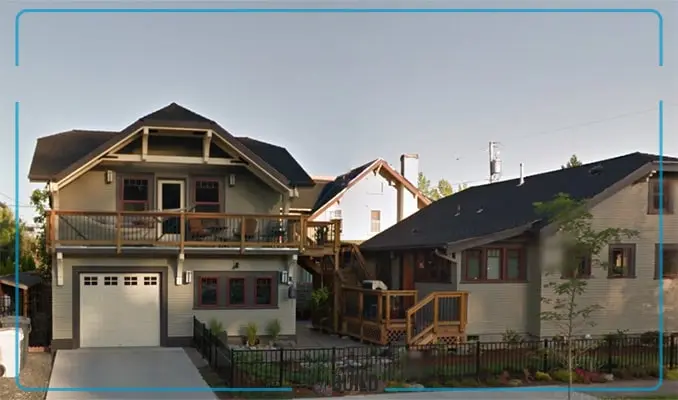
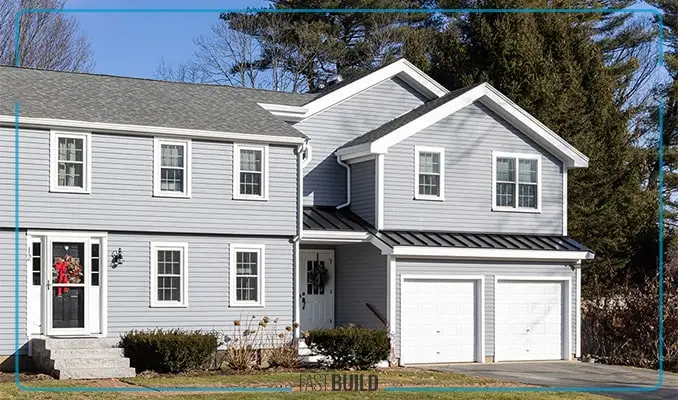
If you’re unsure whether you can build an accessory dwelling unit on your property, the best way is to contact your local county or city building department to learn their specific ADU regulations for ADU construction or building a granny flat. States like California, Oregon, and Washington encourage building ADU houses as part of their solution to housing shortages. If you live in these states, this could be a great opportunity as a landowner to build an Accessory Dwelling Unit and benefit from the steady income it can generate.
In total, 13 states across the U.S. have legalized ADU house construction to help reduce housing costs. California is the leading state, with the highest number of ADU homes. California is the leading state, with the highest number of ADUs, often referred to as backyard cottages or secondary units. Among all California cities, Los Angeles, San Francisco, and San Diego have the largest numbers, mainly because housing costs in these areas are extremely high, making ADU in los angeles a more affordable option for residents.
So, according to California Government Code (§§ 66313(a); 66314(d)(3)), what is an ADU? an ADU is accessory to a primary residence and must include complete independent living facilities for one or more persons. An ADU can be detached, attached, or located within the proposed or existing primary dwelling. This includes attached garages, storage areas, or similar spaces, as well as detached garages or other accessory structures, provided everything is located on the same lot as the main residence.
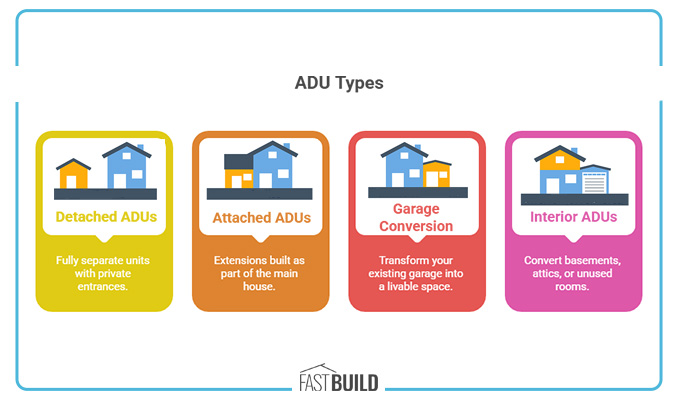
Detached ADUs
A fully separate unit built on the same lot as the main house. It has its own entrance and complete living facilities. Examples include:
- A small backyard cottage
- A standalone unit near the main house
(Gov. Code, §§ 66314(d)(3); 66323(a)(1), (a)(2), (a)(4)(A))
Attached ADU
An ADU that shares at least one wall with the primary home. These are often built as an extension of the existing house. Examples include:
- An addition to a duplex
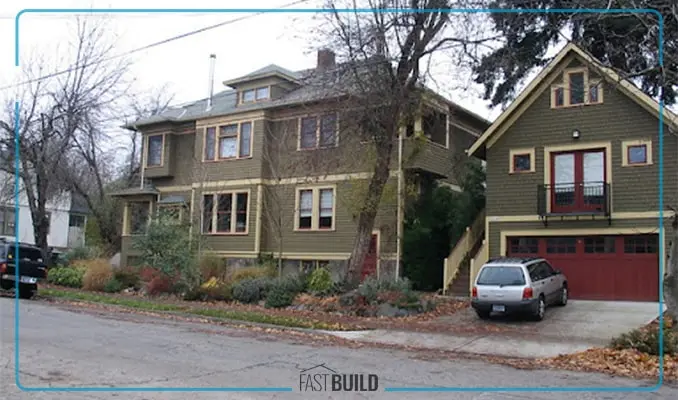
- A unit built above an attached garage
- A new second story on a single-family home
- A newly constructed basement unit
Converted ADUs
Also called garage conversions or interior ADUs, these units are created by transforming existing spaces into livable areas. Examples include:
- Converting a garage into a small apartment
- Turning an attic, basement, or unused room into an ADU
- In multifamily buildings, converting storage rooms or other non-livable areas into residential units
👉 In summary:
- Detached ADUs = standalone backyard units.
- Attached ADU = built as an extension of the main house.
- Converted ADUs = made from existing spaces like garages, attics, or basements.
This flexibility makes ADUs a popular housing option, since homeowners can choose the type that best fits their lot size, lifestyle, and budget.
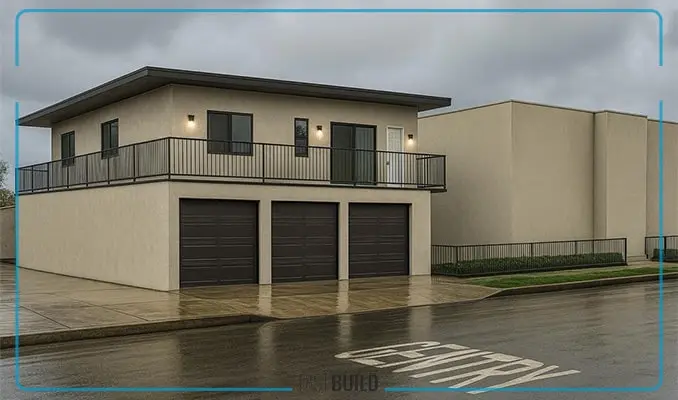
Before starting construction, it’s important to understand what is an ADU and the regulations that govern it. Knowing the rules around size, permits, parking, and placement will help ensure your project meets legal requirements and avoids costly delays.
- Height Requirements for an ADU house: How Tall Can Your Unit Be?
California law sets different maximum heights for accessory dwelling units (ADUs) depending on the type of main dwelling, whether the lot is near transit, and the building’s design (Gov. Code, § 66321, subd. (b)(4)):
- 16-foot height limit (subd. (b)(4)(A)) – This is the standard height for ADUs on lots with an existing or proposed single-family or multifamily dwelling. It applies to most locations without special conditions.
- 18-foot height limit with an extra 2 feet for roof pitch (subd. (b)(4)(B)) – On lots with an existing or proposed single-family or multifamily dwelling that is within half a mile of a major transit stop or a high-quality transit corridor, ADUs can be slightly taller: up to 18 feet, plus an extra 2 feet if needed to match the roof slope of the main building. This rule encourages ADUs near transit while allowing them to blend with the main structure’s roofline.
- 18-foot height limit for multifamily, multistory dwellings (subd. (b)(4)(C)) – For lots with an existing or proposed multifamily, multistory dwelling, ADUs can reach 18 feet regardless of transit proximity. This accommodates larger, multistory buildings.
Key differences:
- Type of dwelling: (A) and (B) apply to single-family or multifamily; (C) applies specifically to multistory multifamily.
- Proximity to transit: Only (B) allows extra height based on being near major transit or high-quality transit corridors.
- Roof alignment adjustment: Only (B) explicitly allows an additional 2 feet to match the main building’s roof slope.
These rules are intended to balance ADU development with neighborhood character and transit accessibility (Gov. Code, § 66321, subd. (b)(4)).
- Parking Requirements for an ADU house:
Parking requirements for Accessory Dwelling Units (ADUs) are very limited. By law, a city cannot require more than one parking space per ADU or per bedroom, whichever number is smaller. These spaces can also be provided as tandem parking on a driveway.
Homeowners do not need to provide guest parking for ADUs, and if a garage or carport is converted into an ADU, the city cannot force you to replace the lost parking spots. Understanding what is an accessory dwelling unit and the true need that cities are incentivizing—building Accessory Dwelling Units—helps clarify why these parking rules apply. In many areas, local agencies are even reducing or eliminating parking requirements altogether to make ADU construction easier and to encourage walking, biking, and public transit.
- ADU Size Requirements and Restrictions: What’s Allowed
- Minimum Lot Size:
There is no minimum lot size required to building an ADU. A city or county cannot stop you from building just because your lot is considered “too small.” - Minimum Unit Size:
Local governments cannot set a minimum size that blocks very small “efficiency units.” By law, an efficiency unit can be as small as 150 square feet. - Maximum Unit Size:
For attached ADUs: Local agencies can use a percentage of the main house’s size (for example, up to 50%). But in all cases, the ADU must be allowed to be at least 850 sq. ft. (or 1,000 sq. ft. if it has more than one bedroom).
For detached ADUs: At least 850 sq. ft. (or 1,000 sq. ft. with more than one bedroom) must be allowed. If a city does not have its own ADU ordinance, the default state law allows up to 1,200 sq. ft. for detached ADUs.
Cities can adopt less restrictive rules and allow even larger ADUs if they choose.
- Conversions:
If you convert an existing space (like a garage or part of your home) into an ADU, those unit size limits do not apply.