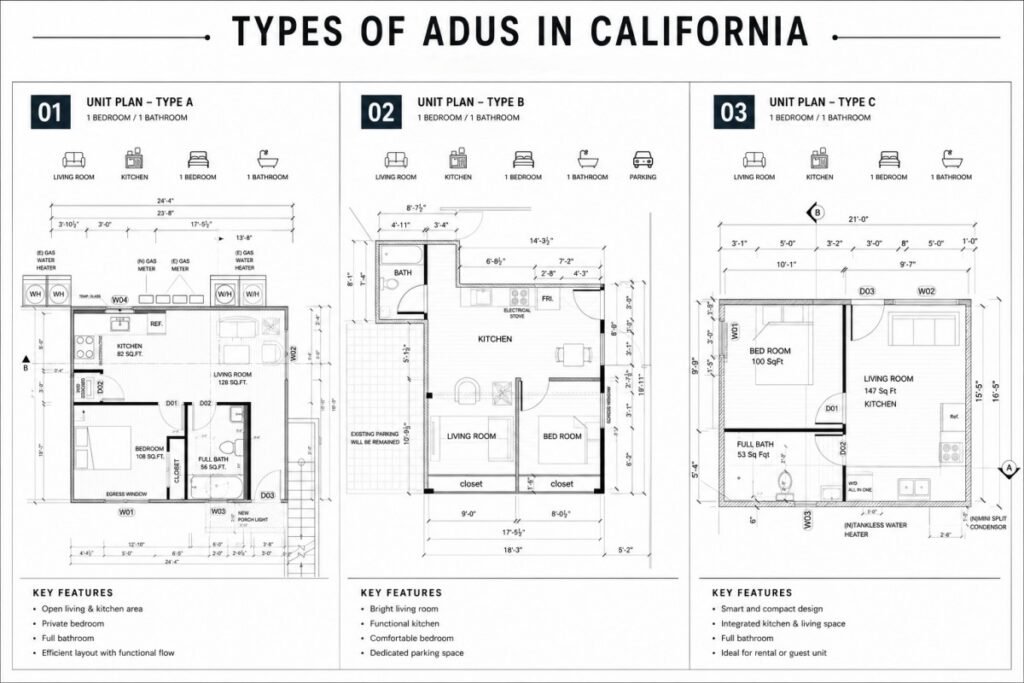
Not all ADUs are the same — and the type you choose will affect your budget, your rental income, your family’s privacy, and the long-term value of your property. Before you start looking at floor plans or calling contractors, it is worth understanding what your options actually are.
What is an ADU, really, when it comes down to your own property? The answer depends on what you already have on the lot and what you want the unit to do. Each ADU type comes with different costs, different permitting requirements, and different trade-offs. This article walks through each one clearly so you can make an informed decision.
Why the ADU Type You Choose Matters
The type of ADU you build directly affects three things: your property’s future value, the privacy and comfort of whoever lives there, and your long-term rental income potential. These are not minor details — they are the difference between an ADU that performs well for years and one that creates ongoing problems.
The two most common trade-offs are cost versus privacy, and new construction versus conversion. A detached ADU gives you the most privacy and the highest rental value, but it costs the most to build. A JADU costs the least but gives tenants the least independence. Every other type falls somewhere in between. The right choice depends on your lot, your budget, and your goals — not on which type sounds best in theory.
1. Detached ADU — Maximum Privacy, Highest Value
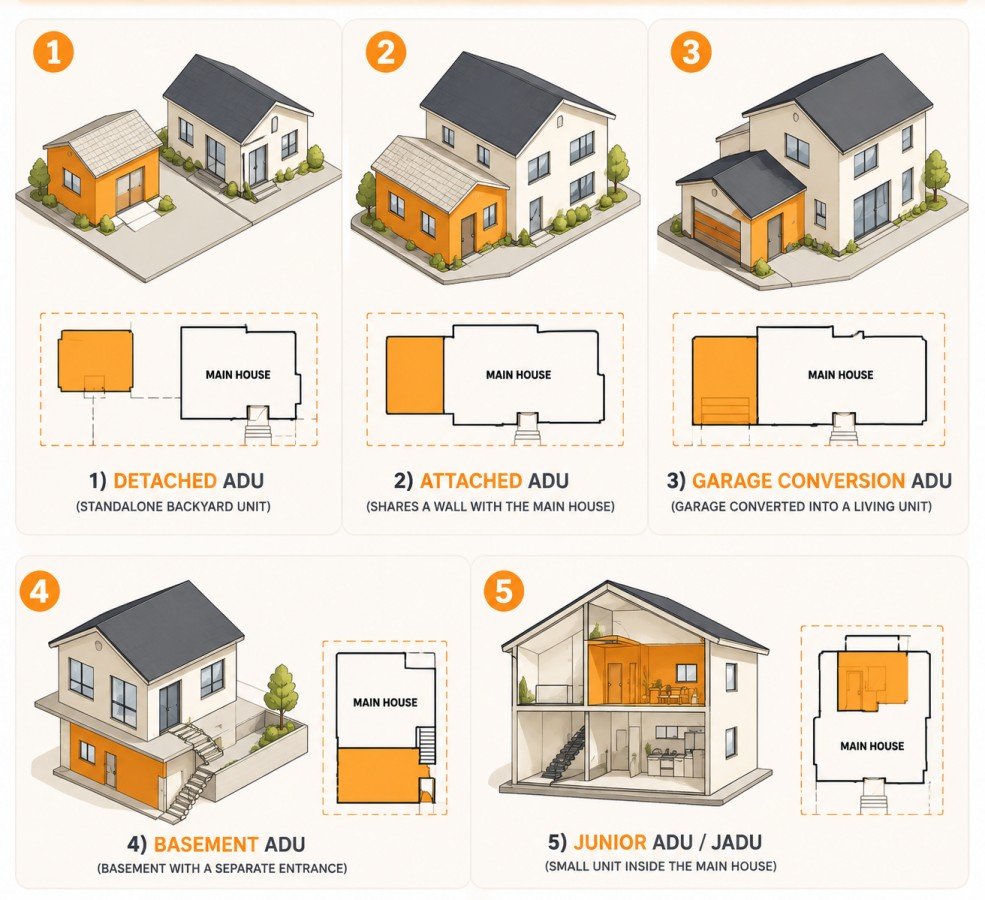
A detached ADU is a fully independent structure built on the same lot as the main house, with no shared walls. It has its own entrance, its own foundation, its own roof, and its own mechanical, electrical, and plumbing systems — completely separate from the primary residence. Under California law, detached ADUs can be up to 1,200 square feet.
This is the type tenants prefer most. The separation means no shared walls, no shared utilities, no daily contact with the landlord. For homeowners who plan to rent the unit long-term, a detached ADU consistently commands the highest rental rates — typically $200 to $500 per month more than a comparable attached unit.
The trade-off is cost. A detached ADU requires a new foundation, full exterior construction, roofing, and independent utility connections. In California, expect to spend $180,000 to $400,000 or more depending on size, location, and finish level. That is the most expensive starting point of any ADU type — but it also adds the most value to the property.
Best for: Homeowners with rear yard space who prioritize rental income, long-term tenants, and maximum property value increase.
California rule: Requires at least 4 feet from the property line. Independent MEP systems required — no shared utilities with the main house.
2. Attached ADU — Lower Cost, Still Independent
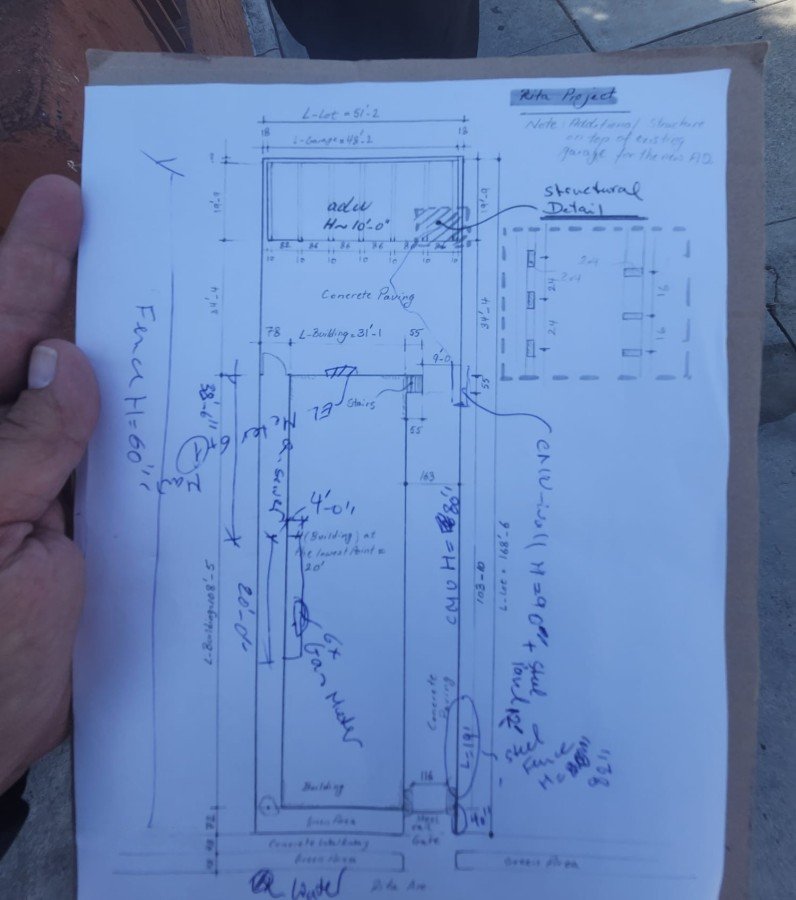
An attached ADU shares at least one wall with the primary residence. It can be built as an addition to the side or rear of the house, above an attached garage, or as a new level on a single-story home. Despite the shared wall, an attached ADU has its own private entrance and functions as a completely separate living unit.
The cost advantage over a detached ADU is real: sharing a wall means sharing part of the structure, which reduces framing, foundation, and sometimes utility costs. In California, attached ADUs typically run $120,000 to $300,000 depending on size and complexity.
The main limitation is the shared wall. Noise travels between connected structures, which matters for tenants who prioritize quiet. Proper soundproofing in the shared wall addresses this but adds to the upfront cost. It is an investment worth making if the unit will be rented.
One practical note from our projects: all windows, doors, and openings for an attached ADU should be positioned on the setback side of the unit — away from parking areas or adjacent structures — for both noise reduction and air quality. In our Corona, California project (404 sq ft garage conversion), we placed all openings on the setback side and put no openings on the parking-facing wall. That single decision made a significant difference in the quality of the living environment.
Best for: Homeowners with side or rear yard space who want an independent unit at lower cost than a detached build.
California rule: Maximum size is the lesser of 50% of the main house floor area or 850–1,000 sq ft depending on bedroom count.
3. Garage Conversion ADU — The Most Popular Option in California
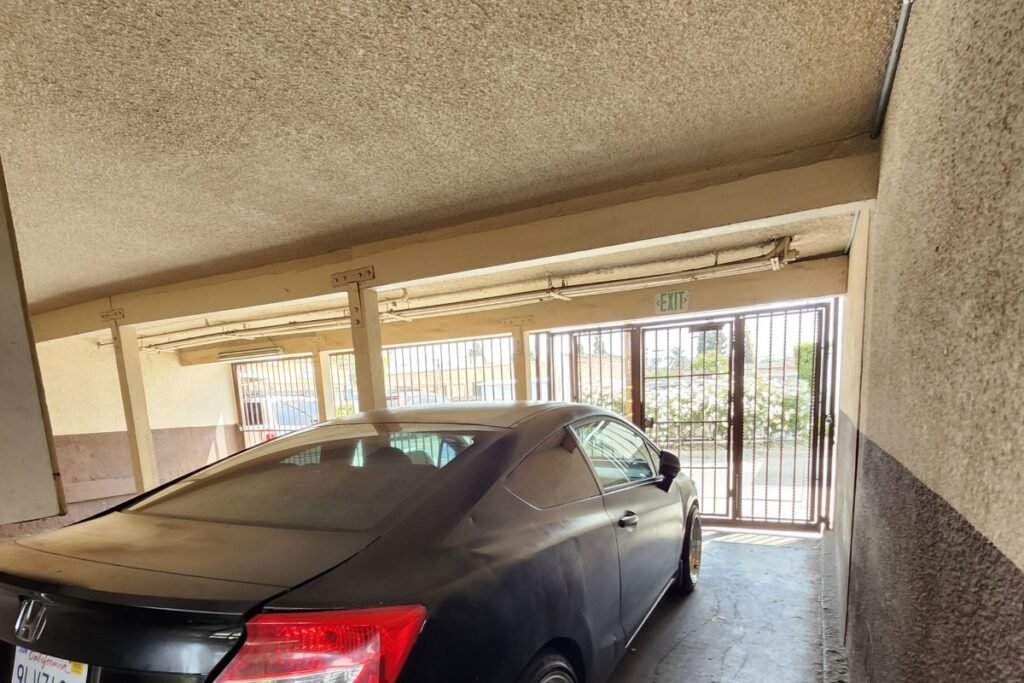
Garage conversions are the most common ADU type in Los Angeles and the surrounding area — and the reason is straightforward: millions of California homeowners have garages that function as storage rather than parking. Converting that space into a permitted ADU puts a structure that already exists to much better use.
The existing structure — four walls, a roof, a foundation — eliminates the most expensive parts of new construction. That makes garage conversions significantly cheaper than building a new detached or attached ADU. Typical cost range in California: $100,000 to $200,000, depending on the size of the garage and the scope of upgrades needed.
But a garage conversion is not as simple as adding furniture and calling it done. Garages are not built to residential standards. They need insulation, new plumbing, upgraded electrical, HVAC, proper egress windows, and often structural work to support the new use. The existing roll-up door is typically removed and replaced with a framed wall — which becomes the new facade of the unit, where the entry door and windows go.
One detail that significantly affects the quality of a garage conversion is access. In our Marbrisa project in Huntington Park, the garage at the rear of the lot opened onto a back alley — which meant the converted ADU could have a completely independent entrance with no shared path with the main property. That level of separation is rare for a garage conversion and adds meaningful rental value. In our Belgrave project, also in Huntington Park, a 1,085 sq ft five-car garage was converted into a three-bedroom ADU — one of the larger single-unit garage conversions we have completed.
The obvious trade-off: you lose the garage. For homeowners who rely on covered parking, this is a real consideration. California law does not require you to replace lost parking spaces when converting a garage to an ADU — but the practical impact on daily life is worth thinking through before committing.
Best for: Homeowners with an underused attached or detached garage, especially in dense California cities where lot space is limited.
California rule: No replacement parking required when converting a garage to an ADU.
4. Basement or Interior Conversion ADU — Lowest Starting Cost, Hidden Complexity
A basement or interior conversion ADU takes an existing part of the home — a finished or unfinished basement, a large unused room, or another interior space — and converts it into a separate living unit. Everything is already there: the walls, the foundation, the roof. No new construction from scratch.
On paper, this looks like the cheapest ADU type. In practice, interior conversions often surprise homeowners with costs they did not anticipate: waterproofing a basement, adding egress windows to meet residential code, upgrading electrical panels, running new plumbing lines, and installing HVAC in a space that never had it. These are not optional — they are required to pass permit inspection.
That said, if the existing space is in good condition and already has basic utility access, an interior conversion can be the most cost-efficient path to a usable ADU. The range is wide: $80,000 to $150,000 for a well-suited space, more if significant structural or mechanical work is needed.
Interior conversions work especially well for multigenerational families — a private basement unit for adult children returning home, or a separate space for a parent who wants independence without being completely separated from the household.
Best for: Homeowners with an existing basement or large interior space and a tighter construction budget.
Key risk: Hidden costs from waterproofing, egress, and MEP upgrades. Get a proper assessment before assuming the cost will be low.
5. Junior ADU (JADU) — Most Affordable, Least Independent
A Junior ADU (JADU) is limited to 500 square feet and must be built within the existing structure of the home — no additions, no new structures. It requires its own private kitchen area but is allowed to share a bathroom with the main house. That shared bathroom is the key distinction from a full ADU.
The cost advantage is real: no new foundation, no new exterior walls, often no major structural work. A JADU typically costs $50,000 to $100,000 — the lowest starting point of any ADU type. The permitting process is also generally simpler than a full ADU.
The limitation is privacy. A JADU is not a fully independent home. It is more like a private suite within the existing house — well suited for a family member, a student, or a guest, but not ideal for a long-term tenant who expects full independence. JADUs rent for less than ADUs, and the shared bathroom is the primary reason.
One thing worth knowing: the line between an ADU and a JADU can come down to a single design decision. In our Corona, California project, the unit was 404 square feet — under the 500 sq ft JADU threshold. There was an existing bathroom that could have been shared with the main house. If the client had accepted shared bathroom access, it would have been a JADU. Instead, they chose to designate the bathroom exclusively for the ADU — making it a fully independent unit. Same space, same bathroom, different classification.
Best for: Homeowners on a tight budget who need a private space for a family member or want modest rental income without a major construction project.
California rule: Maximum 500 sq ft. Must be within existing home structure. Bathroom may be shared with main house.
ADU Type Cost Comparison in California
From most to least expensive, the general order is:
- Detached ADU: $180,000 – $400,000+ — highest cost, highest rental value and privacy
- Attached ADU: $120,000 – $300,000 — shared wall reduces cost, still fully independent
- Garage Conversion: $100,000 – $200,000 — existing structure saves on foundation and framing
- Basement / Interior Conversion: $80,000 – $150,000 — lowest new construction cost, but hidden upgrades common
- JADU: $50,000 – $100,000 — least expensive overall, but limited independence and lower rental potential
These are starting ranges — every project has its own variables. A large, complex garage conversion can cost more than a simple attached addition. What matters is getting a realistic assessment of your specific space before committing to a type.
Rules That Apply Across All ADU Types in California
Regardless of which type you choose, a few rules apply to every ADU project in Los Angeles and surrounding cities:
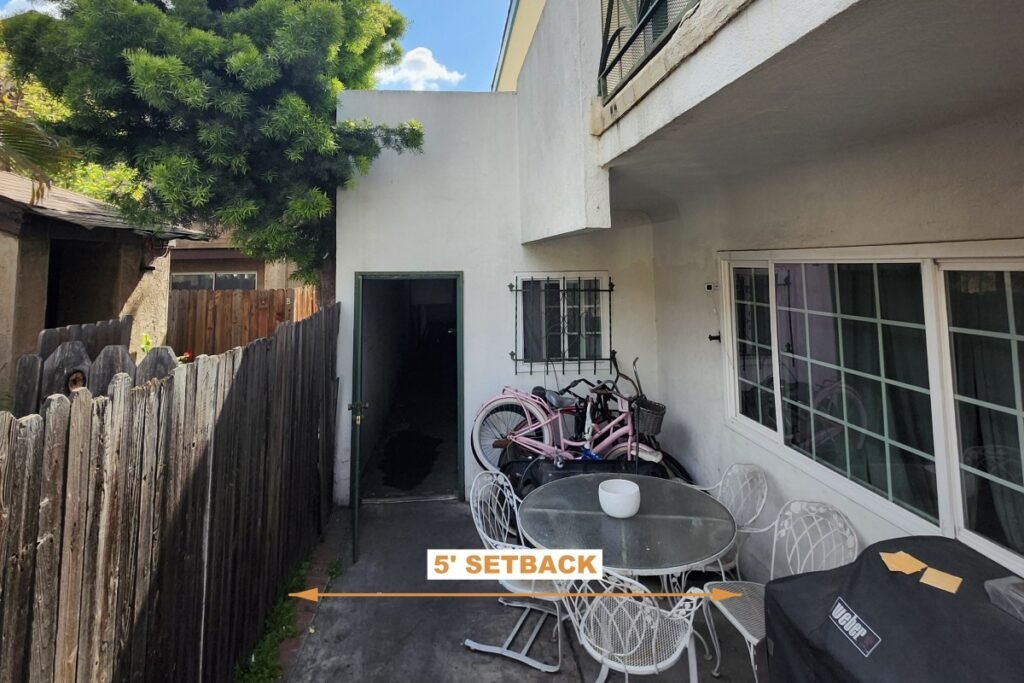
- Setbacks: At least 4 feet from the property line. A wall without openings needs 6 feet of clearance from adjacent structures; a wall with windows or doors needs 10 feet.
- Bedroom minimum: 100 square feet of net floor area per bedroom, not counting closets. We had a Huntington Park project where 70 sq ft bedrooms were rejected in plan check.
- Existing walls: Demolishing and rebuilding an existing wall triggers current setback rules. Keeping the existing structure almost always protects more floor area.
- Easements: Any utility, drainage, or access easements on the property restrict where you can build. Check the title report before finalizing the design.
- Color and materials: The ADU’s exterior must match or complement the main house. Cities enforce this in plan check.
Whichever type you choose, the drawings still have to clear your city’s plan check. If your property is in Los Angeles, our ADU plans Los Angeles page walks through what that takes.
Frequently Asked Questions About ADU Types in California
What is the most popular ADU type in California?
Garage conversions are the most common ADU type in California, particularly in Los Angeles and surrounding cities. The main reason is that many homeowners already have a garage that functions as storage — converting it costs less than new construction and puts an existing structure to productive use.
Which ADU type is the cheapest to build?
JADUs are the least expensive, typically $50,000 – $100,000, because they are built within the existing home structure with no new foundation or exterior walls. Basement and interior conversions are the next most affordable. If you need a fully independent unit, a garage conversion is usually the most cost-effective option.
Can I convert my garage into an ADU in California?
Yes — and it is one of the most common ADU projects in the state. California law does not require you to replace lost parking spaces when converting a garage. The conversion requires a full permit package including architectural, structural, and MEP plans, and the garage must be upgraded to meet residential building standards.
Can I build more than one ADU on my property in California?
Yes. California law allows most single-family properties to have one ADU and one JADU simultaneously. Multifamily properties may qualify for additional ADUs. In our Marbrisa project in Huntington Park, we designed two ADUs on one lot — a storage conversion attached ADU and a garage conversion ADU with alley access.
Not Sure Which ADU Type Is Right for Your Property?
We evaluate your lot, your existing structures, and your goals — then recommend the ADU type that makes the most sense for your specific situation. We handle the full permit-ready package in-house: architecture, structural, and MEP. No guesswork, no multiple consultants.