
A lot of construction work in California gets done without a permit. Sometimes it’s a previous owner who added a room or converted a garage without going through the city. Sometimes it’s work done years ago when enforcement was less consistent. Sometimes it’s a contractor who told the homeowner a permit wasn’t needed when it was.
However it happened, the result is the same: unpermitted work that exists in the building but doesn’t exist on paper. And at some point usually when the owner tries to sell, refinance, or pull a new permit that gap becomes a problem that has to be resolved.
As-built drawings are how you resolve it. We document what was actually built, prepare drawings that accurately reflect the existing conditions, and work through the process of getting the work legalized with the city.
We’ve completed over 25 as-built drawing projects across California residential and commercial and the process is the same every time: measure accurately, draw accurately, and give the city what it needs to review and approve what’s already there.
Legalizing an ADU specifically? See our dedicated legalize an unpermitted ADU in California page for how AB 2533 changed the process, what the permit package includes, and what it costs.
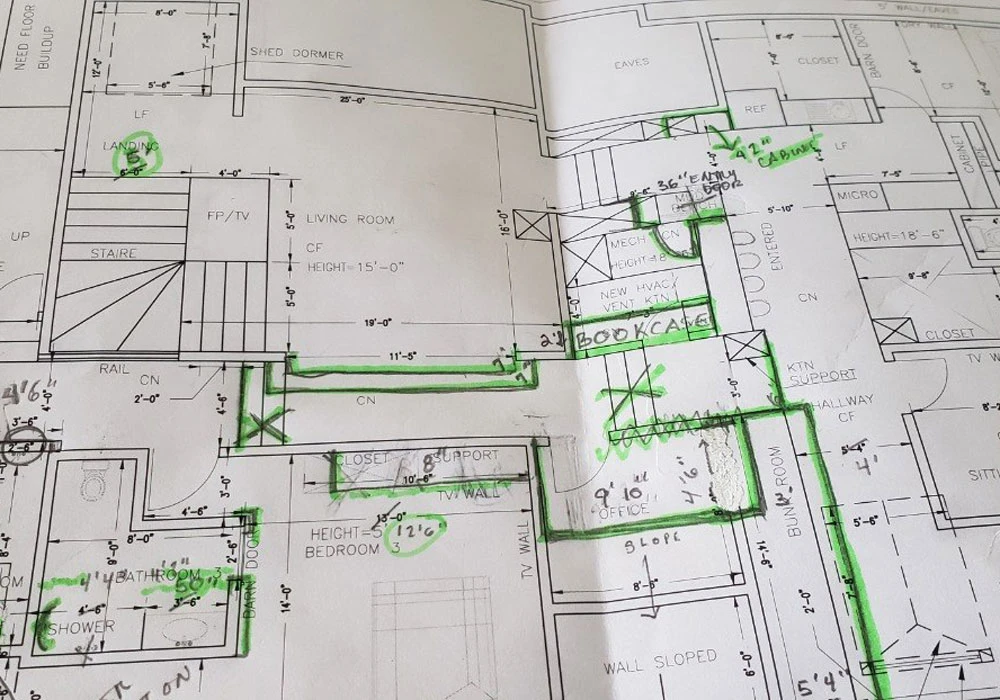
As-built drawings are technical drawings that show a building or structure as it was actually constructed not as it was originally designed or permitted, but as it exists today.
They’re different from permit drawings in one important way: permit drawings show what you’re planning to build. As-built drawings show what’s already been built. When unpermitted work needs to be legalized, as-built drawings give the city the documentation it needs to review the existing construction and determine whether it meets code.
Property in Los Angeles? See our dedicated as-built drawings Los Angeles page for LADBS requirements, local pricing, and turnaround times.
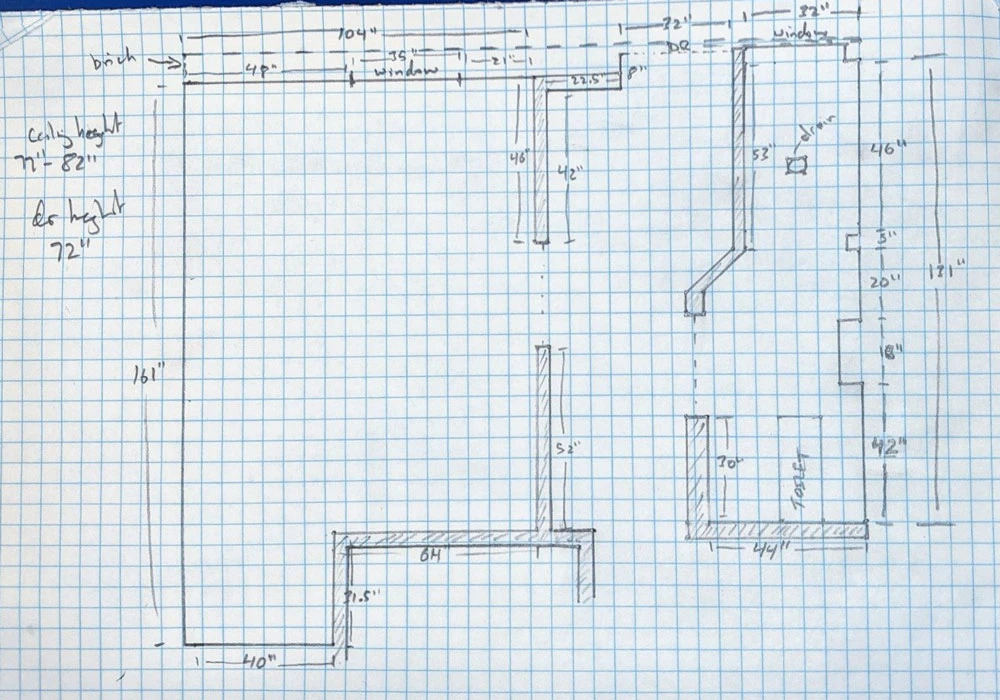
The most common situation we encounter: unpermitted work that needs to be legalized. Here’s what typically triggers the need:
Selling the property — A real estate transaction surfaces unpermitted work. The buyer’s inspector flags an addition, a converted garage, or a finished basement that doesn’t show up in the city’s records. The lender won’t finance the purchase, or the buyer won’t close, until the work is permitted or disclosed and resolved.
Pulling a new permit — You want to do new work on the property, and the city discovers unpermitted work during the application process. In many California jurisdictions, the city will require the existing unpermitted work to be legalized before they’ll issue a permit for new work.
Insurance claim or coverage issues — An insurance company questions coverage for a space or structure that doesn’t appear in the city’s records. Legalized square footage is treated differently than unpermitted square footage in most policies.
Code violation or complaint — A neighbor complaint or a routine inspection surfaces unpermitted work and the city issues a notice of violation. Legalizing the work requires as-built drawings as part of the permit application.
Renovation planning — You’re planning to renovate or expand an existing space, but you don’t have accurate drawings of what’s currently there. As-built drawings give you and your contractor an accurate baseline to design from.


We conduct a thorough field measurement of the existing conditions every room, every system, every structural element that’s relevant to the unpermitted work. Accuracy is critical here. An as-built drawing that doesn’t accurately reflect what’s actually built creates problems during inspection.
We prepare a complete set of as-built drawings architectural plans, structural where applicable, and MEP where the unpermitted work involved mechanical, electrical, or plumbing systems. The drawings are prepared to the same standard as a permit drawing set, because that’s exactly what they become when submitted to the city.
Before we submit, we review the as-built drawings for code compliance. This is where as-built projects get complicated: the existing work was built at some point in the past, under whatever code was in effect then or with no code compliance at all. The city typically reviews the work against the code that was in effect when the work was done, but this varies by jurisdiction and project type.
If the existing work has issues that need to be addressed before the city will approve it structural elements that don’t meet code, safety issues, or missing systems we identify those upfront and discuss the options with you before submittal.
We submit the as-built drawing set to the city as a permit application for the existing work. The city reviews the drawings and, if approved, schedules an inspection. The inspector visits the property to verify that what’s shown on the drawings matches what’s actually built.
If the work is concealed inside walls or otherwise not visible the city may require portions to be opened for inspection. This is something we discuss with you before submittal so there are no surprises.
Once the city approves the drawings and the inspector signs off on the work, the permit is issued. The work is now on record as permitted, and the gap between what exists and what’s documented is closed.
We’ve done this enough times to know that the process doesn’t always go smoothly and we’d rather tell you that upfront than have you find out mid-project.
Some unpermitted work is relatively straightforward to legalize. A garage conversion that was done well, meets current ADU standards, and just needs to be documented that process is usually predictable. We prepare the drawings, the city reviews them, and the permit gets issued.
Other situations are more complicated. Work that was done poorly, doesn’t meet structural requirements, or involves safety issues may require physical modifications to the building before the city will approve it. An old addition with undersized framing, a converted basement with inadequate egress, or a room built over a setback line these require a conversation about what’s actually fixable through the permit process versus what may need to be removed or modified.
We assess the existing conditions honestly before we commit to a scope of work. If we see issues that are likely to complicate the legalization process, we tell you before we start not after you’ve paid for drawings.

It depends on the size and complexity of the unpermitted work. A single-room addition is a different scope from a multi-room home expansion or a commercial tenant improvement. We assess the scope and provide a quote after the initial consultation.
From the time we start field measurements to the time the permit is issued, the process typically takes 2 to 4 months sometimes longer depending on the jurisdiction and whether the city requires corrections or additional documentation. We’ll give you a realistic timeline estimate for your specific situation.
We’ve handled as-built projects on compressed timelines when a real estate transaction is involved. The city’s review timeline is outside our control, but we can prioritize the drawing preparation and submittal to move as quickly as possible. Contact us and explain the timeline we’ll tell you honestly whether it’s achievable.
This is something we assess during the site visit and document review. If there are issues, we discuss the options with you which may include modifying the work, applying for a variance, or in some cases accepting that certain work may not be legalizable in its current condition. We’d rather have that conversation upfront than after the drawings are submitted.
Yes. We prepare the as-built drawing set, submit to the city, respond to any comments, and coordinate with you on the inspection. You don’t have to manage the city process yourself.
Yes. We’ve handled as-built drawing projects for commercial tenant improvements, mezzanines, and structural modifications the process is the same as residential, though commercial as-built projects often involve more complex MEP documentation.
Book a free consultation and get expert guidance on your project, timeline, and permit requirements.
Book a free consultation and get expert guidance on your project, timeline, and permit requirements.
From architectural plans to structural engineering and permit documents, Fast Build can help turn your idea into buildable plans.
Adding {{itemName}} to cart
Added {{itemName}} to cart