Commercial projects move on schedules that don’t have room for permit delays. A tenant improvement that stalls in plan check pushes back the contractor, the lease start date, and the revenue that’s supposed to follow. A new commercial build that gets correction comments costs not just redesign fees it costs weeks or months of carrying costs on a property that isn’t generating anything yet.
We’ve prepared commercial permit drawings for projects across California and other states cannabis cultivation facilities, rehabilitation centers, business park renovations, retail build-outs, warehouses, and food service spaces. The scope varies significantly. The requirement doesn’t: a complete, coordinated drawing set that moves through plan check efficiently.
Our commercial permit drawing service covers architecture, structural engineering, and MEP all in-house, all coordinated before anything goes to the city.
Building in San Diego? See our dedicated commercial permit drawings in San Diego page for local pricing, DSD plan-check requirements, and timelines.
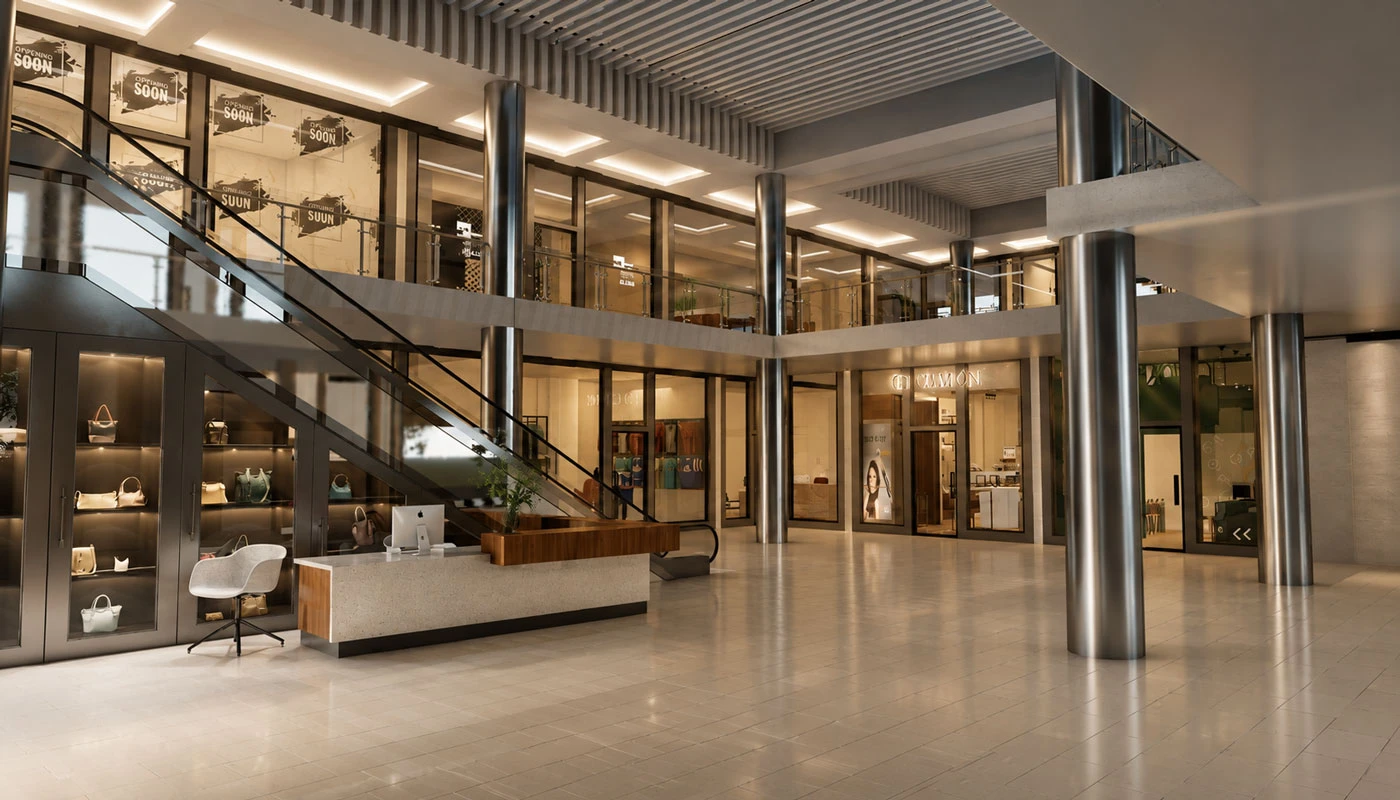
Commercial permit drawings aren’t one-size-fits-all. We work across a wide range of commercial project types:
– Tenant Improvements (TI) — office, retail, restaurant, medical, and specialty commercial spaces
– New commercial construction — ground-up commercial buildings and mixed-use development
– Warehouse and industrial — including specialty storage and distribution facilities
– Food service — restaurants, fast food, cafes, and specialty food retail
– Healthcare and rehabilitation facilities — outpatient clinics, rehab centers, medical offices
– Retail build-outs — single-tenant and multi-tenant retail spaces
– Specialty commercial — cannabis facilities, entertainment venues, recreational centers
– Business park and multi-building renovations — phased commercial renovation projects.
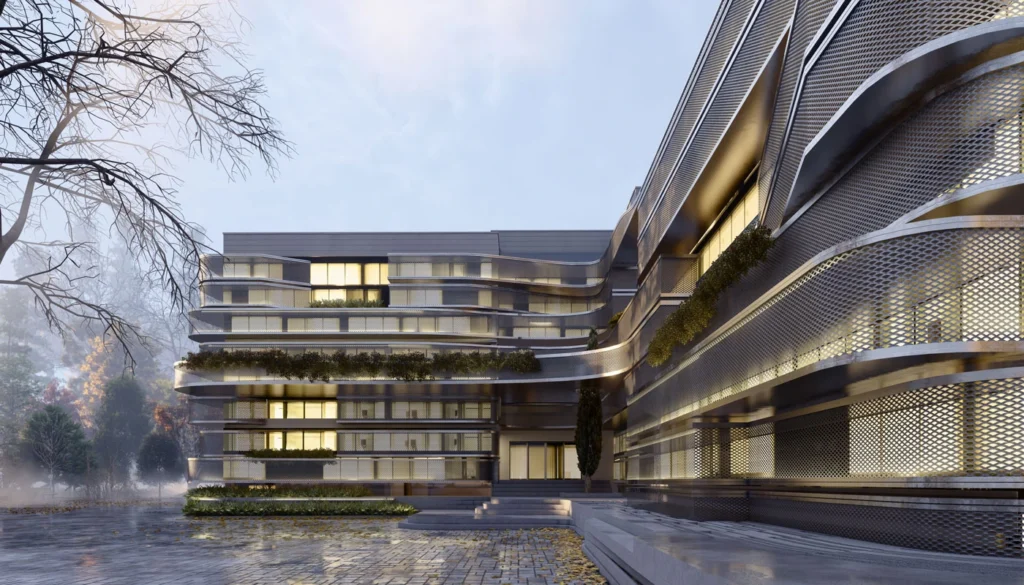
A few examples from our commercial project history:
Full design and permit plans for a cannabis farm operation. Cannabis facilities carry some of the most complex permitting requirements of any commercial project type state licensing, local conditional use permits, building permits, and strict MEP requirements for grow lighting, HVAC, and electrical loads. We prepared the complete permit drawing set covering all disciplines
Design and permit drawings including occupancy classification, accessibility compliance, and the specific egress and life safety requirements for healthcare-adjacent facilities. Projects like this require careful coordination between architectural layout, structural design, and MEP particularly fire protection and HVAC for clinical environments
Multi-building commercial renovation requiring phased permit submittals across multiple structures. Coordinating permit packages for phased commercial work requires careful documentation of what’s existing, what’s being modified, and how each phase interacts with the others.
Design and permit drawings for a combined retail showroom and warehouse facility a project that required navigating both retail occupancy requirements and warehouse/storage code compliance in the same building envelope.
Tenant improvement drawings for the conversion of an existing 7-Eleven into a Mexican fast food and taco shop. Food service TIs are among the most documentation-intensive commercial permits health department coordination, commercial kitchen requirements, grease interceptors, hood exhaust systems, and updated electrical and plumbing all need to be documented and approved.
Design and permit drawings for a new smoothie shop build-out in Los Angeles. A good example of where thorough documentation matters even on modest projects LA’s plan check process doesn’t give smaller projects a pass on completeness.
Occupancy classification drives everything. The International Building Code (IBC) classifies buildings by occupancy type retail (M), business (B), assembly (A), industrial (F), storage (S), healthcare (I), and others. The occupancy classification determines egress requirements, fire protection, structural design parameters, accessibility requirements, and more. Getting the classification right from the start is critical.
ADA compliance is non-negotiable. Commercial projects trigger full Americans with Disabilities Act review. Path of travel, parking, restrooms, service counters, and accessible routes all need to be documented and compliant. This is one of the most common sources of plan check corrections on commercial projects.
MEP is more complex. Commercial HVAC, electrical service, and plumbing systems are more demanding than residential larger loads, more equipment, more coordination required. For food service projects specifically, commercial kitchen exhaust, grease waste systems, and health department requirements add additional layers.
Fire and life safety. Commercial occupancies have specific requirements for egress, exit signage, emergency lighting, sprinkler systems, and fire-rated construction. These requirements vary significantly by occupancy type, building height, and square footage.
Multiple review agencies. Depending on the project type, commercial permits may require review by the building department, fire department, health department (for food service and healthcare), and other agencies. Each has its own documentation requirements.
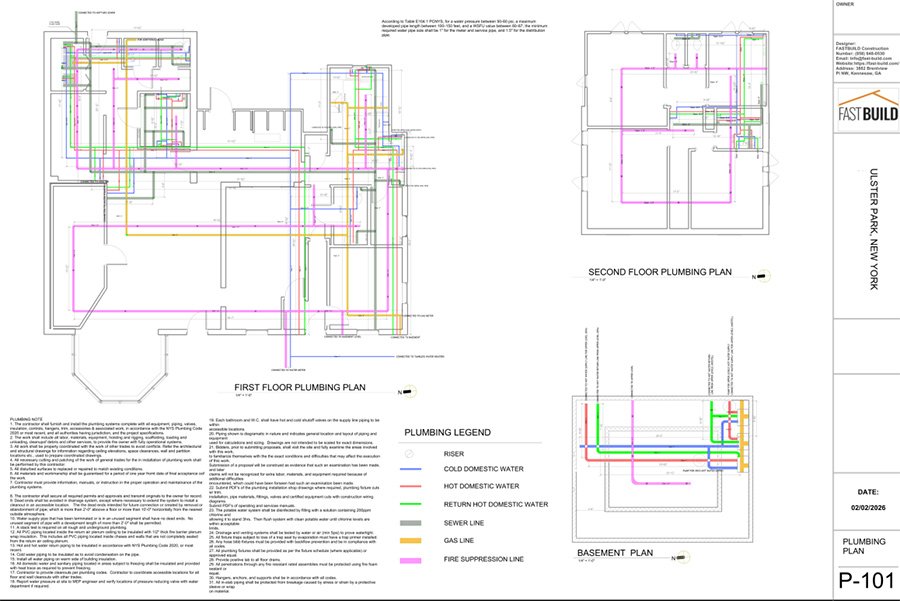
- Site Plan property boundaries, parking, accessibility routes, utility connections
- Floor Plans existing and proposed conditions, occupancy areas, egress paths
- Reflected Ceiling Plans ceiling heights, light fixture layout, sprinkler head coordination
- Exterior Elevations facade, signage zones, ADA access points
- Building Sections and Wall Sections
- Code compliance notes occupancy, construction type, egress analysis, ADA
- Foundation plans and details
- Structural framing plans
- Load calculations PE-stamped
- Mechanical HVAC layout, equipment schedules, duct routing, exhaust systems
- Electrical service entrance, panel schedules, lighting plans, Title 24 compliance
- Plumbing fixture schedules, piping layout, grease waste where applicable
- Fire protection coordination
- Title 24 for California projects; equivalent energy code compliance for out-of-state projects
Our commercial work isn’t limited to California. We’ve permitted commercial projects in Washington, Florida, and Arizona, and we’re experienced working with building codes and permitting processes that vary significantly from California’s.
For out-of-state projects, the process starts the same way: understanding the applicable code, the local jurisdiction’s specific requirements, and what the plan checker is going to look for. The drawing set is built around those requirements from the beginning.
The most expensive commercial permit problems we encounter are the ones that come from projects where the permit drawings were treated as a formality rather than a foundation.
A drawing set prepared quickly and cheaply to “just get something submitted” almost always comes back with correction comments. In commercial plan check, those corrections aren’t minor they often require fundamental changes to the layout, the occupancy classification, or the MEP design. On a commercial project, that costs real money.
The clients who move fastest through commercial plan check are the ones who invest in a complete, coordinated drawing set upfront. The plan checker’s job is to find problems. Our job is to make sure there aren’t any to find.

It depends on the jurisdiction, project type, and completeness of the submission. In Los Angeles, commercial plan check can take anywhere from a few weeks for an over-the-counter permit to several months for a full plan check on a larger project. A complete, well-organized submission is the single biggest factor in how quickly the process moves.
Yes. We’ve prepared permit drawings for food service projects in San Diego and Los Angeles including restaurant TIs, fast food conversions, and specialty food retail. We’re familiar with health department coordination, commercial kitchen requirements, and grease system documentation.
Yes. We’ve worked in Washington, Florida, Arizona, and other states. Requirements vary significantly and we approach each project based on the applicable local code and jurisdiction-specific requirements.
Yes. We’ve prepared permit drawings for small single-tenant retail spaces and larger multi-building commercial projects. The documentation requirements scale with project complexity, but the approach is the same.
Project address, a description of the scope of work, any existing drawings or lease plans if available, and your timeline. We’ll review the information and give you a clear picture of what the permit drawing process looks like for your specific project.
Book a free consultation and get expert guidance on your project, timeline, and permit requirements.
Book a free consultation and get expert guidance on your project, timeline, and permit requirements.
From architectural plans to structural engineering and permit documents, Fast Build can help turn your idea into buildable plans.
Adding {{itemName}} to cart
Added {{itemName}} to cart