
“Tenant improvement allowance” sounds like free money for your build-out. In practice, the allowance is only one part of a larger budget, and the gap between what it covers and what your project costs is where tenants can be caught off guard.
It is important to understand what a tenant improvement (TI) allowance is, how it is applied, and what timing considerations to keep in mind. Just as importantly, both tenants and property owners should understand the key factors that affect how the allowance is negotiated and used. This guide walks you through what you need to know about negotiating TI allowances and avoiding costly mistakes.
What Is a Tenant Improvement Allowance?
A tenant improvement (TI) allowance is a concession offered by a property owner to encourage a tenant to lease space in their building. A concession is a financial benefit or expense that the property owner agrees to provide as part of lease negotiations. A TI allowance is a specific dollar amount paid or credited to the tenant to help cover the cost of preparing and improving the space to meet the tenant’s needs. A strong TI allowance clause defines the amount, what it covers, and when reimbursement occurs. Keep in mind that a TI allowance may not cover 100% of the total cost.
First-Generation vs. Second-Generation Space for TI Allowance
It is also important to understand the difference between first-generation and second-generation spaces when discussing tenant improvement (TI) allowances.
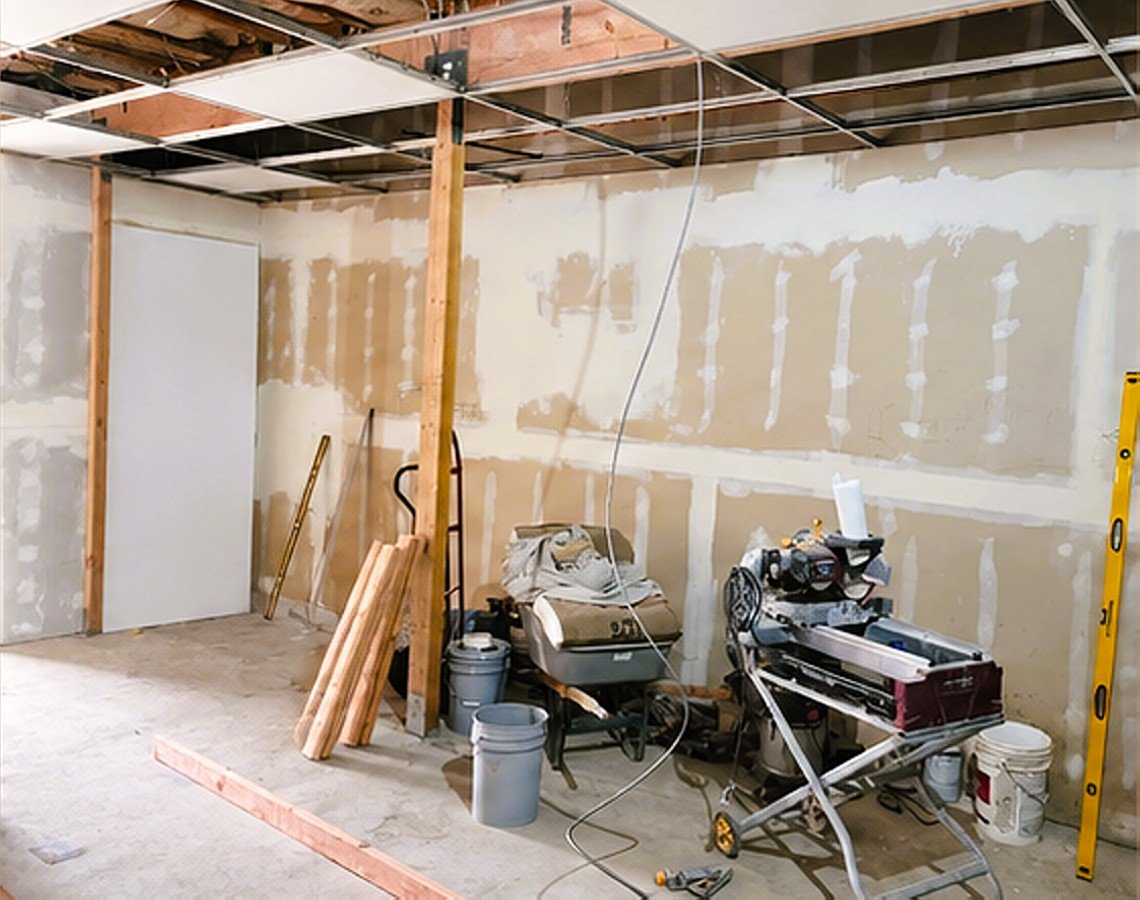
First-generation space refers to new space that has not previously been occupied by a tenant. Second-generation space refers to space that has been occupied by a previous tenant. This distinction is important because second-generation space already has much of the necessary infrastructure in place, including partition walls, electrical systems, mechanical systems, and plumbing. Many fixtures may also already be installed, such as doors and bathroom fixtures. The space may even have an existing lobby that has already been built out or furnished.
As a result, second-generation space generally requires less upfront investment than first-generation space because it does not need to be prepared to the same extent.
Illustrative TI Allowance Ranges by Property Type (2026)
TI allowance amounts vary by market, property condition, lease term, tenant credit, landlord strategy, and the scope of work. Office, restaurant, and medical spaces may require more specialized finishes or building systems than spaces with limited finish requirements.
The following figures are illustrative ranges included for preliminary discussion only. They are not verified statewide averages or construction cost estimates. Do not present them as current market benchmarks unless each range is supported by a reliable, dated source for the relevant market.
| Space Type | Typical Market TI Allowance |
| Class A office — new tenant, long-term lease | $80–$120/SF |
| Class B office — standard build-out | $45–$75/SF |
| Retail strip center — vanilla shell | $25–$50/SF |
| Restaurant — high-cost build-out | $80–$150+/SF |
| Industrial/flex — minimal finish | $5–$20/SF |
| Medical office — specialized MEP requirements | $80–$150+/SF |
These figures should not be used as a construction budget. Actual project costs depend on the scope, existing conditions, design requirements, permit requirements, and contractor pricing. The article does not currently have a verified source for these specific ranges; add a credible market source or remove the dollar figures before publication.
Retail and other commercial projects can vary substantially. For example, converting an existing restaurant to a similar use may require a different scope from converting office space into a restaurant. Evaluate the actual space and proposed use before estimating the allowance needed.
How Is a TI Allowance Paid?
The payment process for a tenant improvement (TI) allowance depends on the terms of the lease agreement. In most cases, the lease specifies how funds are disbursed, what expenses qualify for reimbursement, and what documentation the tenant must provide.
Common payment arrangements include:
- Reimbursement after completion: The tenant pays the contractor for eligible improvements and submits invoices and other required documents to the landlord for reimbursement.
- Direct payment: The landlord pays the contractor directly for approved work, subject to the agreed payment terms.
- Progress payments: Funds are disbursed in stages as the project reaches specified milestones, such as completion of approved construction phases.
Before construction begins, both parties should confirm the eligible expenses, required documentation, payment deadlines, and any conditions that must be satisfied before funds are released. Depending on the lease, these requirements may include approved plans, building permits, paid invoices, contractor lien waivers, inspection approvals, and proof of completion.
The lease should also establish the deadline for submitting reimbursement requests and clarify whether unused allowance funds expire. Because payment terms vary, tenants should not assume that the allowance will be paid upfront or that reimbursement will occur before occupancy.
How Do Landlords Fund TI Allowances?
Once the payment terms are established, the landlord must determine how to fund the tenant improvement allowance. The appropriate approach depends on the property’s financial position, available capital, and the landlord’s investment strategy.
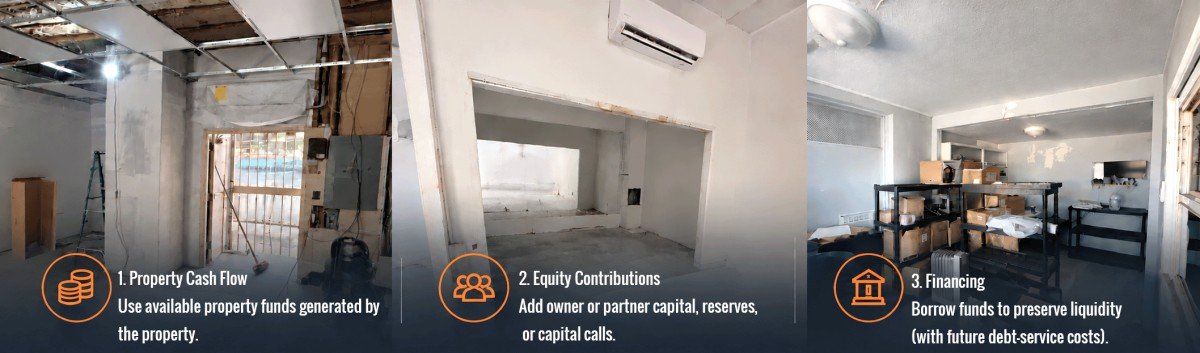
There are three common funding sources:
1. Property Cash Flow
A landlord may use available cash flow generated by the property to cover tenant improvement costs. For example, if a property generates $200,000 in annual net operating income (NOI), the landlord may allocate a portion of its available funds toward a $100,000 TI expense. However, NOI is calculated before debt service and certain other cash expenditures, so the actual amount available for improvements may be lower.
2. Equity Contributions
If available property funds are insufficient, the landlord may contribute additional equity. This may involve using personal or business funds, drawing from an established capital reserve, or requesting additional contributions from investment partners through a capital call.
3. Financing
A landlord may borrow funds to cover tenant improvement expenses rather than using available cash. This approach can preserve liquidity in the short term, but it creates a debt obligation and future debt-service costs.
For example, if a property generates $200,000 in annual cash flow before debt service and financing the TI expense adds $6,000 in annual debt-service payments, the remaining cash flow would be $194,000, assuming no other changes.
Each funding method has different implications for liquidity, financing costs, and investment returns. The landlord should evaluate these factors alongside the property’s operating expenses and the financial commitments established in the lease.
The key distinction is that funding determines where the landlord obtains the money, while the lease determines how and when the TI allowance is paid.
Key Considerations for TI Allowances
- Who manages the work? Clarify whether the landlord or tenant selects the design team and contractor, manages construction, coordinates inspections, and handles change orders.
- Which costs are eligible? Identify whether the allowance may be used for design and engineering fees, permit fees, construction, fixtures, equipment, or other project costs. Do not assume a cost is eligible unless the lease allows it.
- Who owns the improvements? The lease should address ownership and removal obligations for built-in items, specialty equipment, and other improvements when the lease ends.
- Who pays costs above the allowance? Establish how overruns, unforeseen conditions, and tenant-requested changes will be funded and approved.
- What documentation is required? Confirm invoices, proof of payment, lien waivers, permits, inspection records, and any other required closeout documents.
These terms should be reviewed together. A high allowance may be less useful if the eligible-cost rules are restrictive, reimbursement deadlines are short, or the tenant must fund substantial costs upfront.
Tenant Improvements vs. Building Improvements: What Is the Difference?
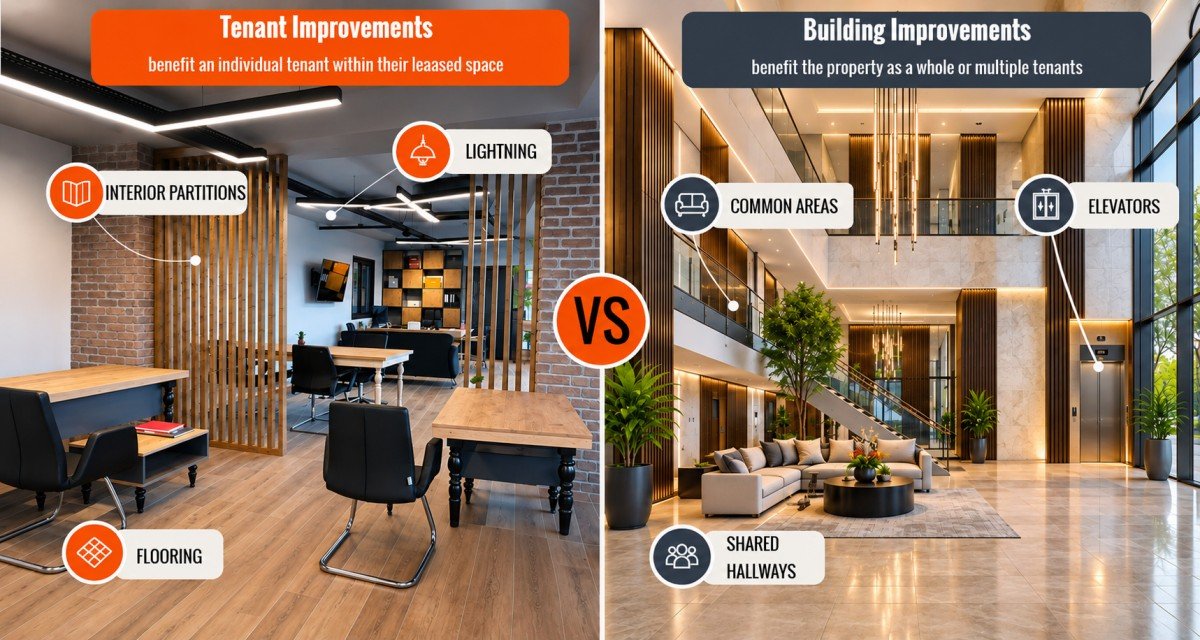
The main difference between tenant improvements (TI) and building improvements is who benefits from the improvements.
- Tenant Improvements (TIs): These improvements directly benefit an individual tenant rather than the entire building. Examples include interior partitions, flooring, lighting, and plumbing fixtures installed within a tenant’s leased space.
- Building Improvements: These improvements benefit the property as a whole or multiple tenants. Examples include upgrades to common areas, shared hallways, elevators, and building-wide systems. A modern gym used by all tenants would qualify as an example of building improvement rather than a tenant improvement.
Common TI Allowance and Lease Concession Structures
The following arrangements are related but are not interchangeable. The lease should define how each contribution or concession works.
- Fixed TI Allowance: The landlord agrees to contribute a stated amount toward eligible improvements. The tenant is generally responsible for costs beyond that amount unless the lease states otherwise.
- Reimbursement: The tenant pays eligible project costs and submits the required documentation to receive payment from the landlord.
- Direct or Progress Payments: The landlord pays a contractor or releases funds at agreed project milestones, subject to the lease requirements.
- Rent Credit: The landlord applies an agreed credit against rent. The lease should state the amount, timing, and how the credit is applied.
- Rent Abatement or Free Rent: The tenant receives a period of reduced or waived rent. This is a lease concession, not automatically a TI allowance, although it may help the tenant manage project cash flow.
- Build-to-Suit or Landlord-Managed Build-Out: The landlord delivers space built to agreed specifications. The scope, schedule, approval process, and responsibility for changes should be documented.
Negotiating TI Allowances
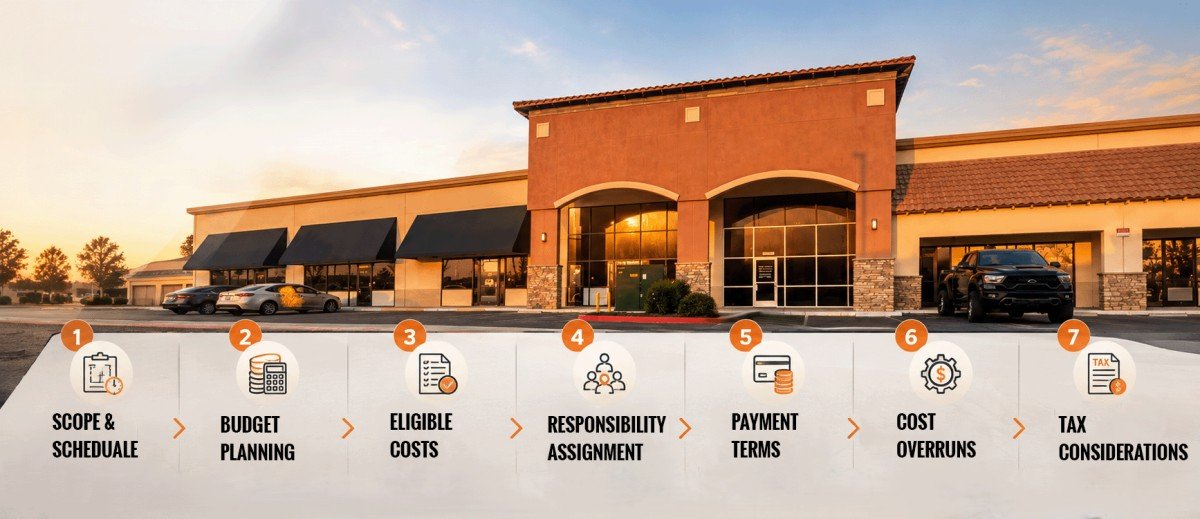
Successful negotiations balance cost certainty for the tenant with risk management for the landlord. Practical steps include:
- Scope and Schedule: Define the work, design milestones, permit review, construction, inspections, and turnover.
- Budget Planning: Prepare an itemized preliminary budget, including assumptions, exclusions, contingency, and potential existing-condition issues.
- Eligible Costs: Confirm which design, engineering, permit, construction, fixture, and equipment costs are covered by the lease.
- Responsibility Assignment: Clarify who manages design, contractor selection, construction, permits, inspections, and change orders.
- Payment Terms: Establish payment milestones, required documentation, submission deadlines, and the allowance expiration date.
- Cost Overruns: Specify who pays costs exceeding the allowance and how changes to the scope are approved.
- Tax Considerations: Consult a qualified tax professional about the tax and accounting treatment of the allowance and improvements.
Tax and Accounting Note: The IRS explains that certain property improvements may need to be capitalized and depreciated. The specific treatment depends on the circumstances and applicable tax rules. Consult IRS Publication 946 and IRS Internal Revenue Bulletin 2013-43 for additional information.
How Tenant Improvement Allowances Benefit Both Tenants and Landlords
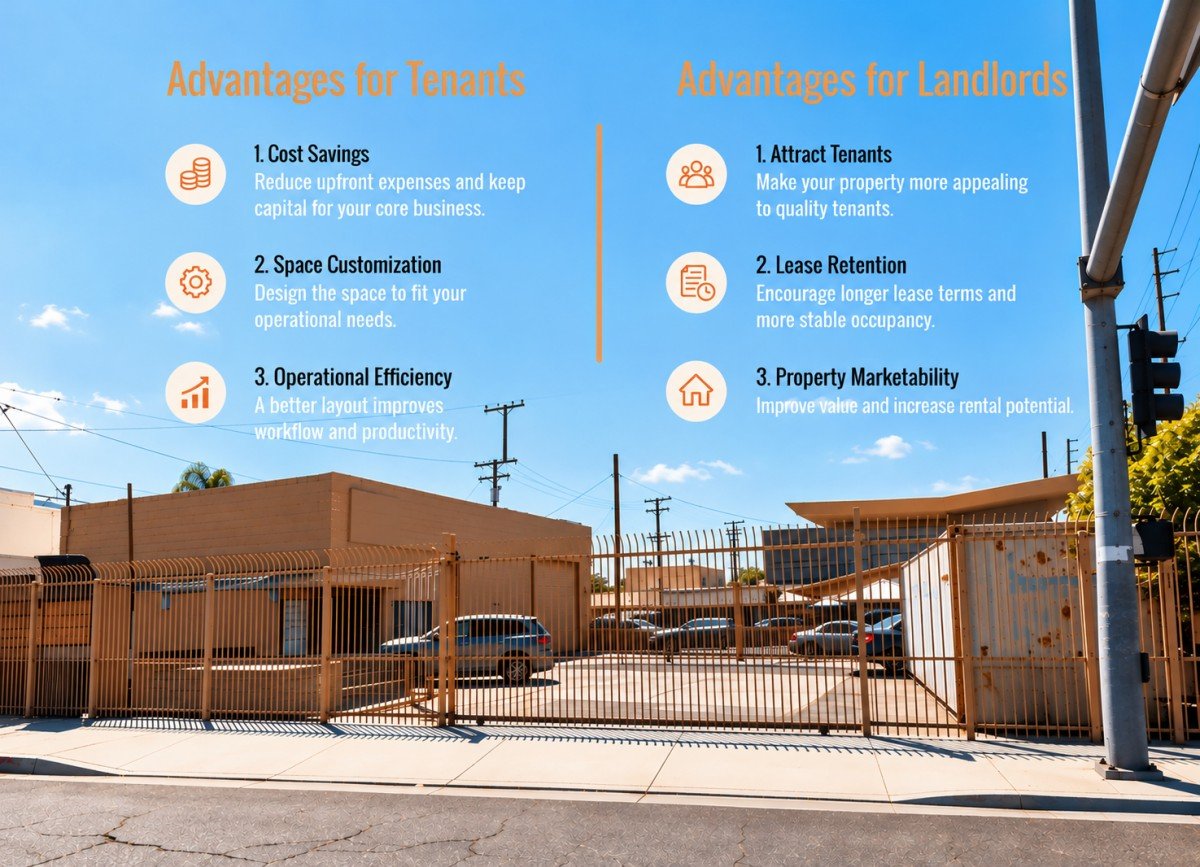
Advantages for Tenants
When negotiating commercial leases, tenants often seek tenant improvement allowances (TIAs) to make their leased spaces better suited to their business operations. Here are some key benefits:
- Cost Savings: One of the most significant benefits of a TIA is the financial relief it provides. It allows businesses to preserve their capital for other critical expenses instead of spending a large portion of their budget on improvements.
- Space Customization: TIAs provide flexibility to tailor a leased space to specific operational needs. For example, one company may need multiple conference and meeting rooms, while another may require more private offices. A TIA helps tenants configure the space to suit their business requirements.
- Operational Efficiency: Customizing a space can improve functionality and productivity. For instance, an optimized layout can streamline workflows and improve employee satisfaction, potentially leading to better overall performance.
Advantages for Landlords
In a competitive commercial real estate market, attracting and retaining tenants requires strategic planning. Offering a tenant improvement allowance can provide several advantages for landlords:
- Tenant Attraction: Offering a TIA can make a property more appealing to qualified tenants seeking spaces that can be customized to meet their operational needs.
- Lease Retention: Tenants who invest time and resources in customizing their leased spaces may be more inclined to commit to longer lease terms, providing landlords with greater occupancy stability and more predictable rental income.
- Property Marketability: Improvements funded through TIAs can enhance a property’s overall value, particularly when they upgrade building infrastructure or add desirable amenities. These improvements may also increase the property’s marketability and rental potential.
Conclusion
A tenant improvement allowance is only one part of the financial and construction planning for a commercial lease. The amount matters, but so do the eligible costs, payment timing, documentation, project responsibilities, and rules for handling overruns. Before signing, compare the allowance with a realistic project budget and confirm the requirements in the lease. For a project involving architectural design, engineering, permits, and construction, coordinating the scope and budget early can help reduce avoidable surprises during plan review and build-out.
A well-planned tenant improvement project starts with the right drawings, a realistic scope, and coordinated building systems. FASTBUILD provides architectural design, MEP coordination, and permit drawings to help you prepare your commercial space for its next phase.
Let’s bring your commercial space to life. Contact FASTBUILD to get started.
Frequently Asked Questions
No. The allowance is limited by the lease terms and may cover only specified costs. The tenant should budget for any amount above the allowance, along with costs that are excluded or not approved.
It depends on the lease. Confirm in writing whether design, engineering, permit, plan-check, inspection, and other soft costs are eligible before incurring them.
Follow the deadlines and documentation requirements in the lease. Some agreements require payment evidence and closeout documents, so the tenant should confirm the process before construction begins.
The lease should identify who is responsible for overruns and how changes are approved. Unless the agreement says otherwise, do not assume the landlord will pay costs above the agreed contribution.
No. Rent abatement reduces or waives rent for an agreed period. A TI allowance is a contribution toward eligible improvement costs. A lease may include both, but each should be described separately.