Signed CF1R and NRCC reports for additions, ADUs, custom homes, and tenant improvements. Delivered in 2 to 4 business days at a flat price, modeled to keep your design intact.
Free scope review included. No obligation, no hourly billing.
Every permit application in San Diego that adds conditioned space or touches the building envelope needs an energy compliance report. It is the least glamorous document in your submittal and one of the most common reasons a package gets returned, usually because the equipment in the report stopped matching the equipment on the plans somewhere along the way.
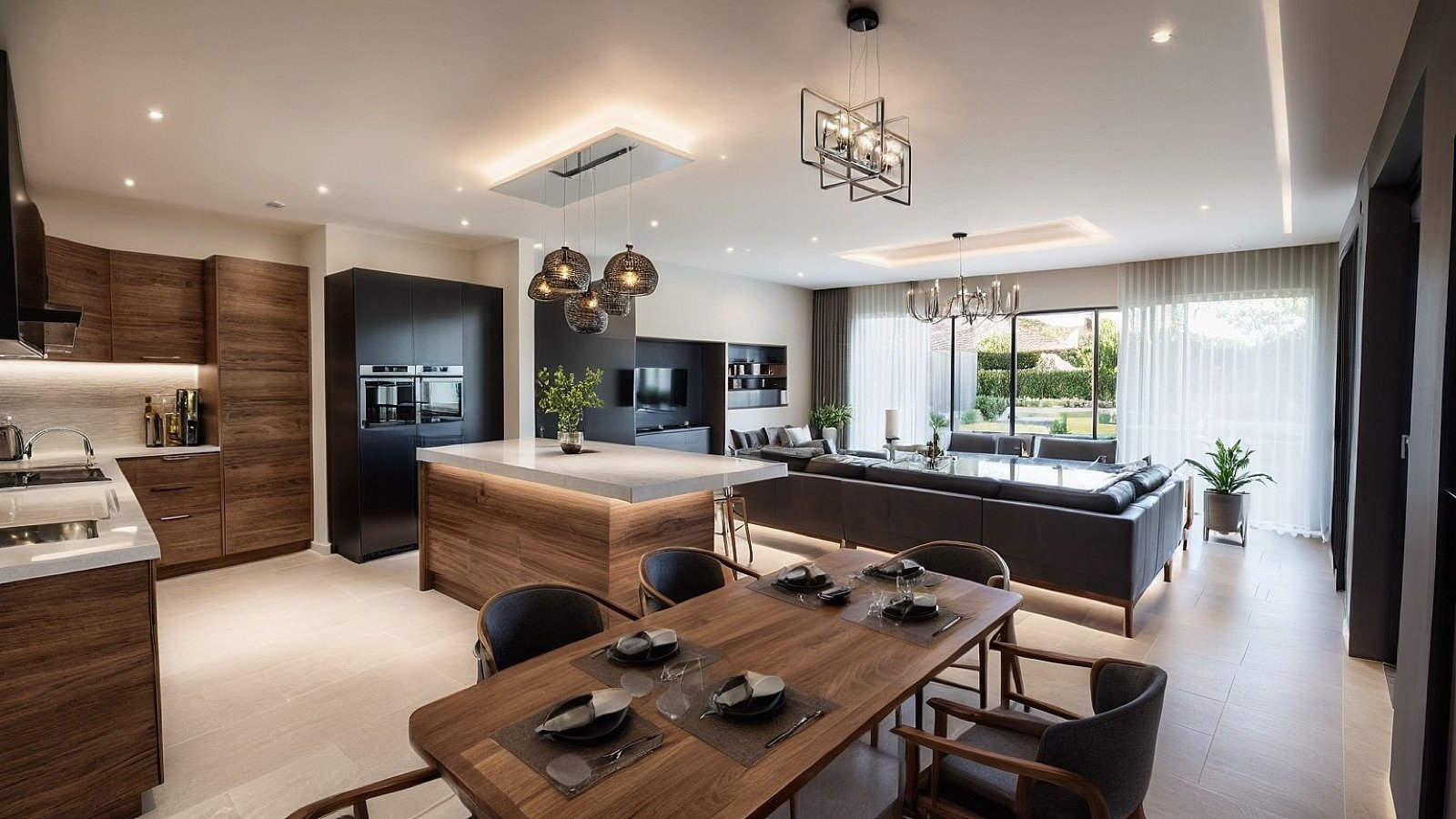
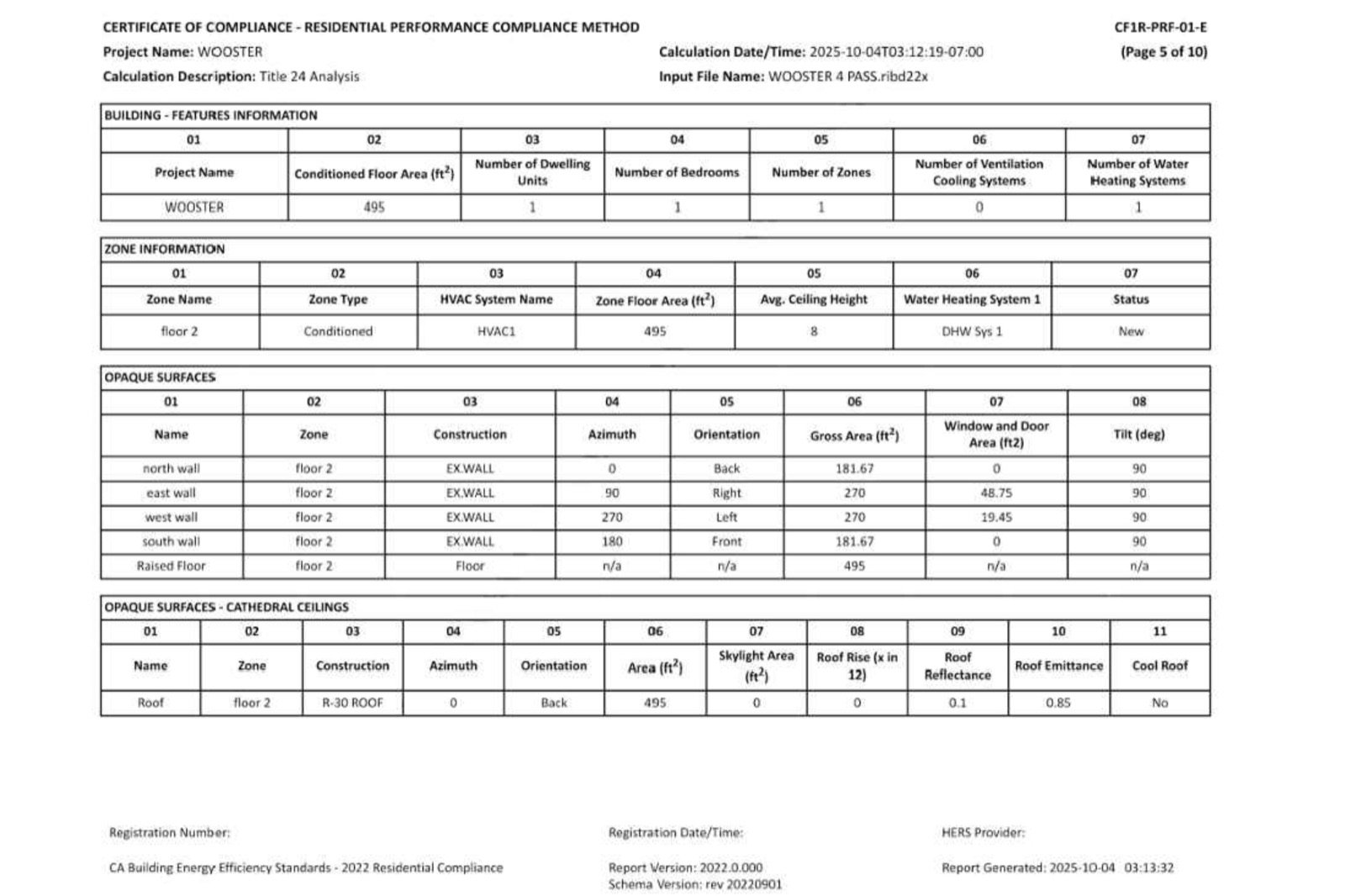
New homes, additions, and whole-house remodels documented for San Diego DSD, on the prescriptive or performance path.
From $685
Accessory dwelling units have their own compliance quirks, especially conversions where the existing envelope is inherited.
From $745
Offices, retail, restaurants, and tenant improvements. Lighting power density, mechanical, and envelope in one NRCC set. These normally ship inside a full set of commercial permit drawings for San Diego.
From $1,150
Existing plus addition modeling, which is where most reports go wrong when the existing conditions are assumed rather than measured.
From $685
Photovoltaic sizing and battery storage documented to satisfy the solar requirement rather than bolted on afterward.
From $585
Architects, contractors, and ADU builders who need reports turned around fast under their own brand at volume pricing.
Custom quote
Title 24 is a statewide standard, but compliance is calculated against your climate zone, and San Diego County contains several. A house in La Jolla, one in El Cajon, and one up in Julian sit in materially different zones with different heating and cooling loads, which means different insulation targets, different glazing performance, and sometimes a different answer on whether the performance path is worth using. A report modeled to a county-wide average passes plan check about as often as it fails, and when it fails you have lost a review cycle. On top of that, San Diego Development Services expects the compliance documents to be registered and signed, not calculated informally and printed. We handle registration as part of the fee, and because we also draw the permit sets and the mechanical design, the equipment listed in your report is the same equipment shown on your drawings.
Floor plans, elevations, and whatever you have on windows and equipment. Scope review is free.
One flat price for the registered report. No hourly billing.
Prescriptive or performance path, whichever protects your design and your construction budget.
Signed CF1R or NRCC ready to submit. Revisions during plan check are included.
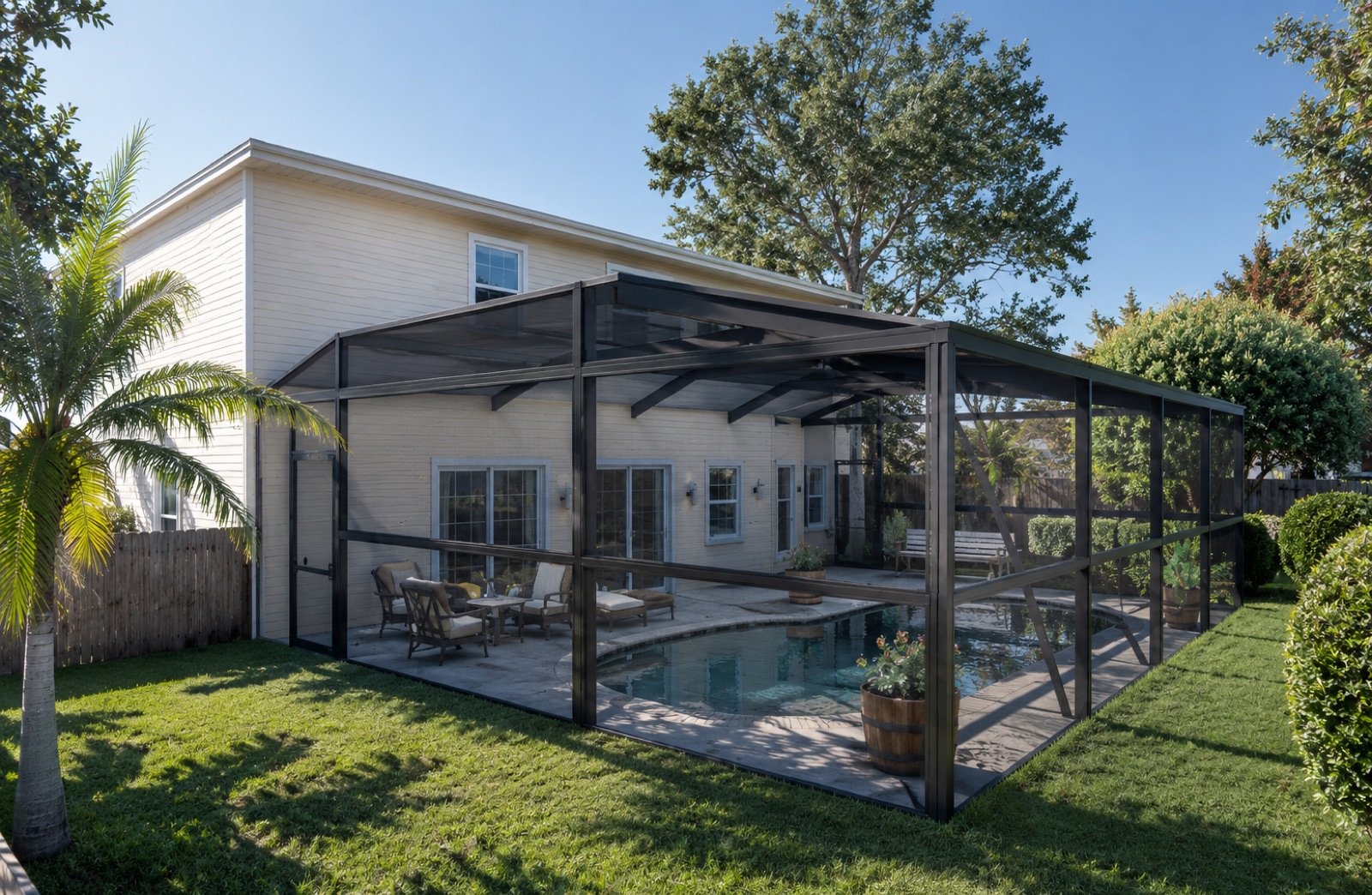
We register the certificate with an approved data registry and deliver the signed CF1R or NRCC your plan checker actually needs, not a spreadsheet printout.
Because we also produce the MEP design and permit sets, the equipment in the report is the equipment on the plans. Mismatches between the two are a common San Diego correction.
A written flat fee before any work starts, never hourly billing. Energy compliance generates revisions whenever a window or a heat pump changes, and hourly is where that gets expensive.
The performance path has real money in it. We look for the trade that keeps your design intact and lowers construction cost, rather than defaulting to whatever complies fastest.
Service areas: San Diego, La Jolla, Chula Vista, El Cajon, Escondido, Carlsbad, Oceanside, Encinitas, Poway, La Mesa, Santee, Vista, and all of San Diego County. See also our Title 24 energy compliance service, MEP design in San Diego, and ADU design in San Diego.
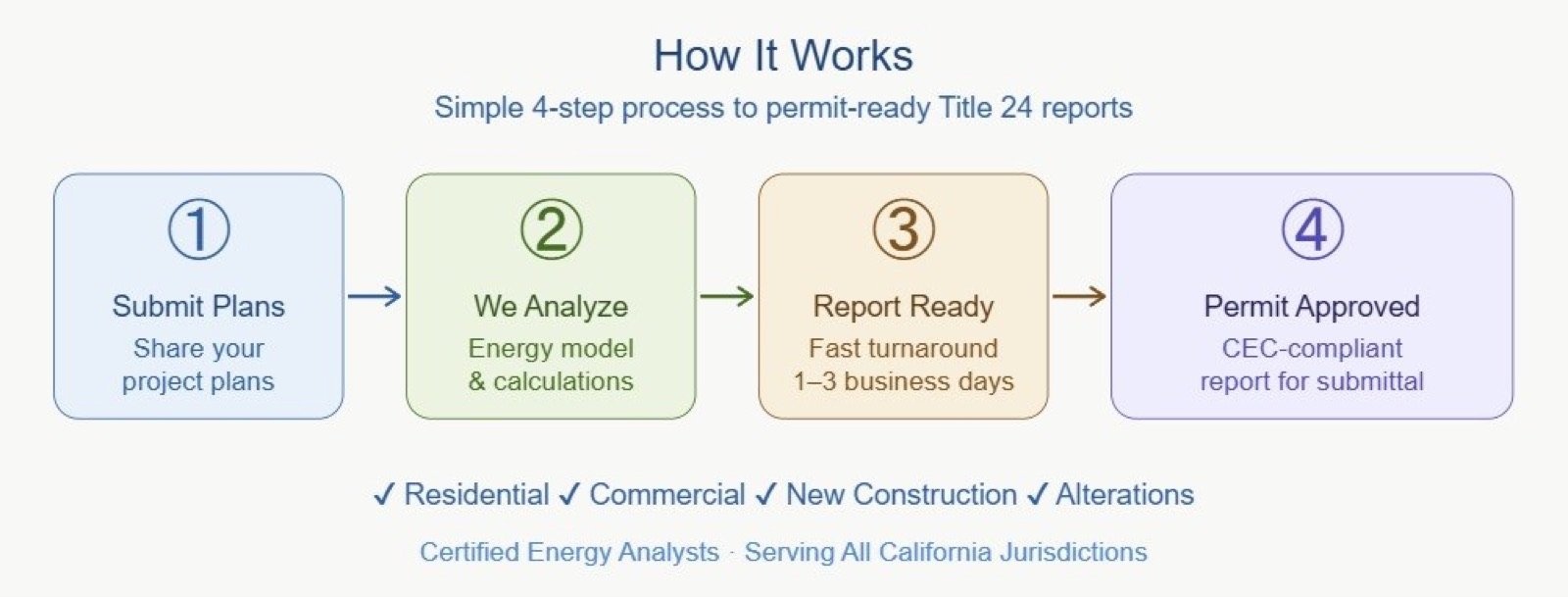
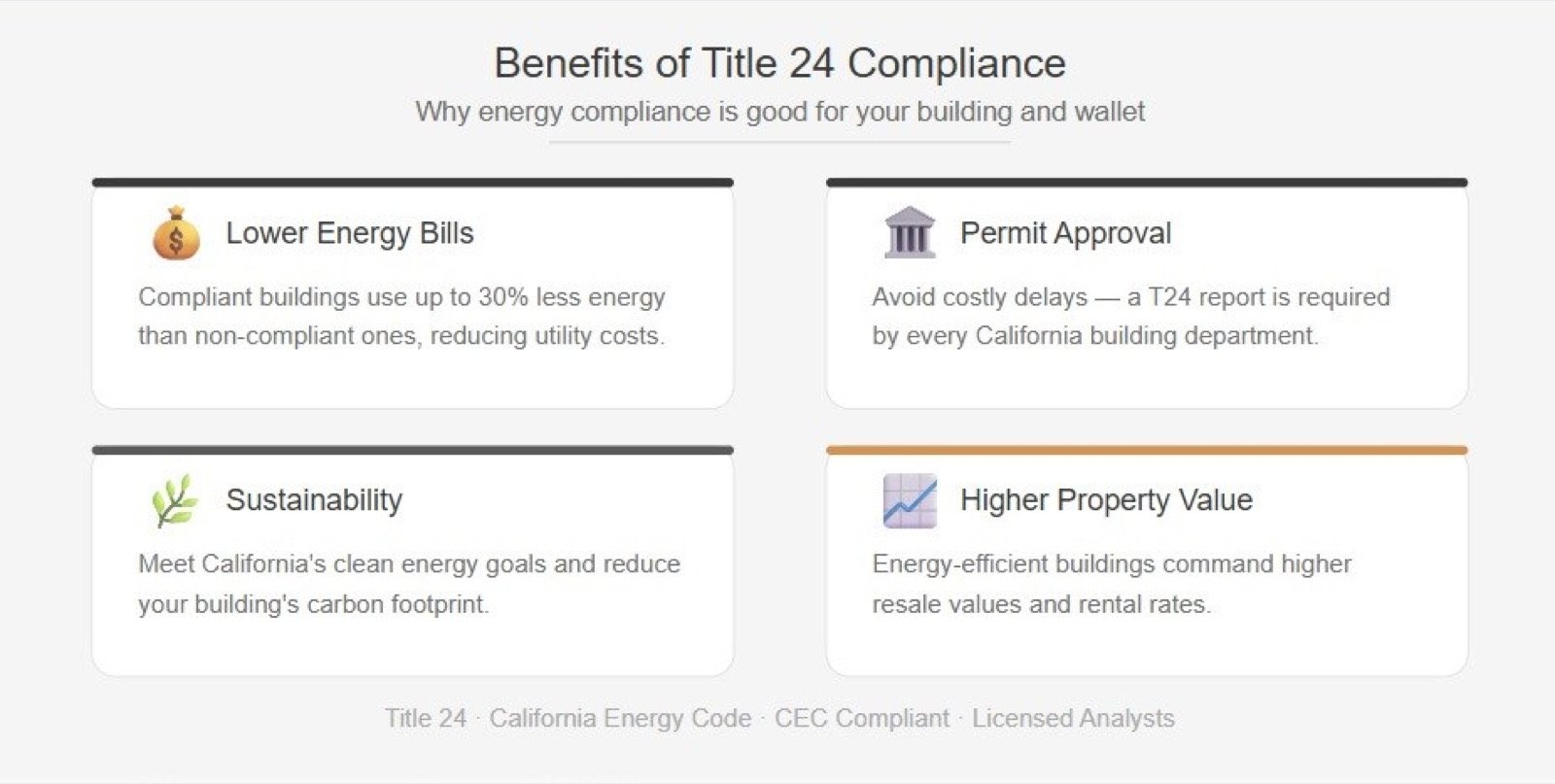
A compliance report is a legal document your contractor builds against and your inspector checks. Here is what we deliver and why each part matters on site.
The signed CF1R for residential or NRCC for nonresidential, registered with an approved data registry and ready to attach to your San Diego DSD submittal.
Wall, roof, and floor insulation values, window U-factor and solar heat gain coefficient, and infiltration assumptions, tied to the actual products specified rather than generic placeholders.
Equipment efficiencies, duct location and insulation, and the water heating system. The 2026 standards push hard toward heat pumps, and the report is where that decision gets priced.
The photovoltaic system size required for your project, plus battery storage where it applies, calculated against your actual roof area and orientation.
Every measure requiring third-party field verification, flagged so your contractor books the rater during construction rather than discovering the requirement at final inspection.
San Diego County spans several climate zones, and the compliance target moves with them. Coastal, inland, and mountain projects are modeled to the right zone, not to a county-wide guess.
The most expensive Title 24 mistake in San Diego is treating the report as paperwork produced at the end. By then the windows are ordered and the HVAC is selected, so the only way left to comply is to buy your way out with upgraded equipment. Run the model early, while the glazing and the mechanical system are still decisions rather than purchase orders, and the performance path will usually find a trade that costs nothing. The second most expensive mistake is letting the report drift out of sync with the drawings after a change. When one firm produces both, as we do, that drift does not happen quietly.
A residential Title 24 report from Fast Build starts at $685 for a straightforward addition or ADU and runs to about $2,450 for a large custom home or a whole-house remodel with multiple HVAC zones. Nonresidential and tenant improvement reports start at $1,150 and scale with the number of systems documented. You get one flat price before we start, and the fee includes the registered certificate, not just the calculation.
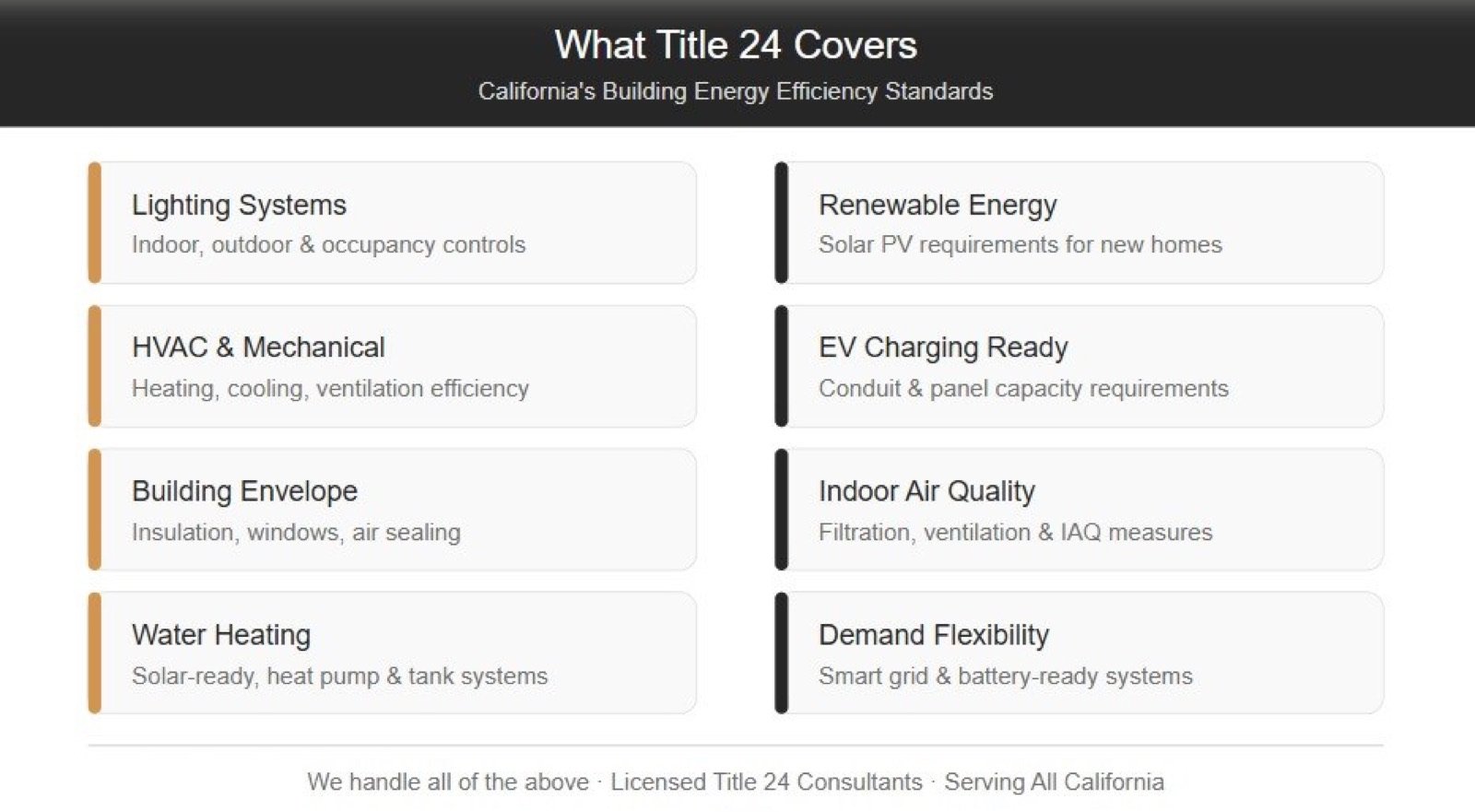
Title 24 Part 6 is California’s Building Energy Efficiency Standards, the statewide code governing insulation, windows, HVAC, water heating, lighting, and on-site solar. It is state law rather than a San Diego rule, so the Development Services Department will not accept a permit application for new construction, an addition, or most alterations without a compliance report. The current standards took effect on January 1, 2026, and they are meaningfully stricter than the previous cycle on heat pumps and electric readiness.
Most residential reports are delivered in 2 to 4 business days once we have your plans and window and equipment specifications. Complex nonresidential projects take 5 to 8 business days. If your submittal deadline is sooner than that, say so when you request the quote and we will confirm what is achievable before you commit rather than after.
The prescriptive path is a checklist: hit every required value for insulation, glazing, and equipment and you comply. It is simple but inflexible. The performance path models your actual building against a code-compliant reference version of itself, which lets you trade a weaker element against a stronger one, for example keeping a large west-facing window by upgrading the HVAC. In San Diego the performance path is usually what makes an architecturally ambitious design affordable, and it is our default unless the project is simple enough that the prescriptive path clearly wins.
Probably yes. Most projects involving ducted HVAC require field verification by an independent HERS rater for items like duct leakage, refrigerant charge, and airflow. Our report identifies exactly which measures need HERS verification so your contractor can schedule the rater at the right stage of construction. Discovering this at final inspection instead of during framing is one of the more avoidable delays we see.
Free scope review on your project + a flat-price quote within 24 hours. No obligation.